


When producing rubber-coated magnets, we primarily use two manufacturing techniques: vulcanization and injection molding. Each method has its own distinct advantages, and the choice of technique depends on the specific product being produced. Although these techniques differ significantly, both result in high-performance rubber-covered magnets.
Vulcanization
1. What is Vulcanization?
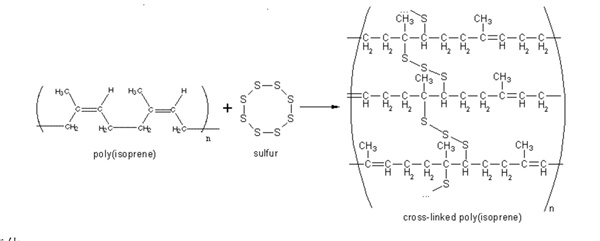
Vulcanization is a special process that transforms the rubber’s mechanical and chemical properties, making it harder and more durable for industrial applications. This process creates cross-links between the rubber’s polymer chains, forming a 3D network structure. The result is a material that is much stronger and more resistant to wear and tear.
Natural rubber has excellent elasticity but can deform under minimal force. Vulcanization enhances these characteristics, turning the rubber into a tougher material suited for heavy-duty use.
2. Which Rubber-Coated Magnets are Made Using Vulcanization?
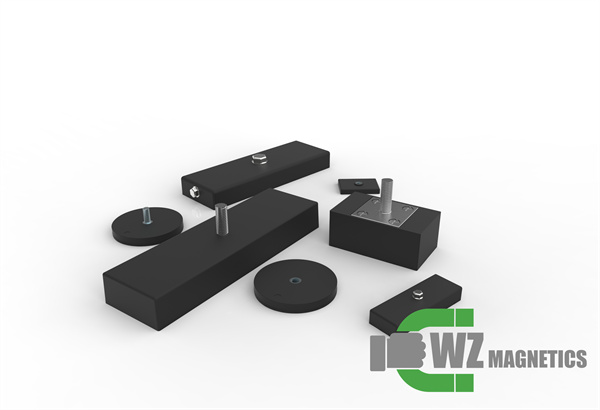
Most of our large square-shaped rubber-coated magnets are made using the vulcanization method. These magnets are typically used in highly corrosive environments, such as exposure to water, UV rays, and oil. The vulcanized rubber coating ensures that these magnets maintain their performance even under harsh working conditions.

Injection Molding
1. What is Injection Molding?
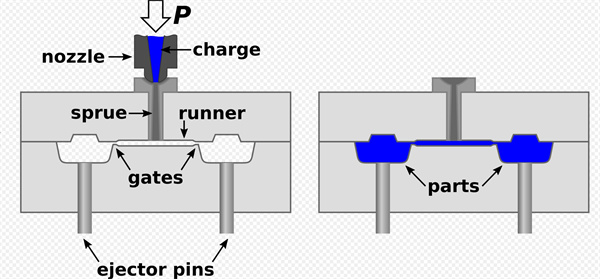
Injection molding involves injecting molten raw material into a mold cavity under high pressure. The material then cools and hardens into the shape of the cavity. Compared to vulcanization, this process is faster and is often automated. Injection molding also provides high precision, making it ideal for producing parts in various shapes and sizes.
2. Which Rubber-Coated Magnets are Made Using Injection Molding?
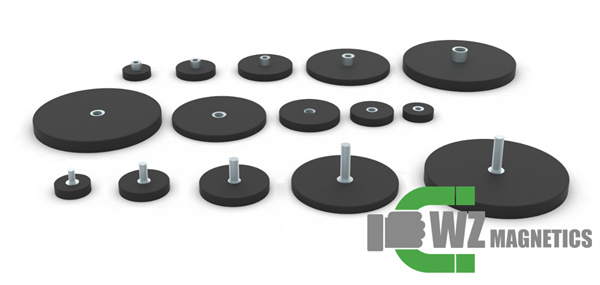
We use the injection molding process to produce all of our round-shaped rubber-coated magnets. This method is ideal for creating magnets in consistent shapes and sizes with accurate detailing.
Vulcanization vs. Injection Molding
1. Differences Between the Two Processes
- Vulcanization alters the material’s properties to make it more suitable for challenging environments, such as extreme heat, cold, or corrosion.
- Injection molding doesn’t change the material’s properties but is focused on shaping the material into a specific form. The choice of material used in injection molding directly influences the final product’s performance.
2. Rubber Materials
- Injection Molding: We use Santoprene TPV (produced by ExxonMobil) for our rubber-coated magnets. Santoprene offers excellent corrosion resistance, oil resistance, and is ideal for outdoor or offshore applications. It is also a recyclable material.
- Vulcanization: This process typically uses NBR (nitrile butadiene rubber) or EPDM (ethylene propylene diene monomer). NBR provides oil resistance, while EPDM is better for long-term aging and resistance to weathering.
3. Investment
- Vulcanization has a lower mold tooling cost compared to injection molding, which involves significantly higher tooling expenses.
4. Efficiency
- Injection molding is much faster than vulcanization and is more suited to high-volume production. The automated nature of injection molding increases productivity.
5. Magnetization
- Vulcanization involves high temperatures that can demagnetize the magnet. Therefore, magnets must be assembled and vulcanized before they are magnetized, or high-temperature-resistant magnets (such as NxxSH or NxxUH grades) need to be used.
- Injection molding, on the other hand, allows magnets to be magnetized before the rubber coating is applied, which eliminates the need for post-magnetization.
6. Choosing the Right Process
The decision between vulcanization and injection molding depends on several factors, including the customer’s requirements, the material to be processed, and the specific application. For example, injection molding is fast but cannot process certain materials like NBR or EPDM, whereas vulcanization can handle these materials.
Conclusion
Both vulcanization and injection molding are crucial manufacturing processes for rubber-coated magnets, each offering distinct benefits. Vulcanization is ideal for challenging environments, providing enhanced durability and performance. Injection molding, meanwhile, offers speed, precision, and flexibility in terms of shape and design. The choice between the two depends on the specific needs of the application.


